Astronaut Sergey Kud-Sverchkov captured from ISS the night view of Beijing, the capital of China.
China’s 2026 Lunar New Year (Spring Festival) was celebrated on Feb. 17, accompanied by a 9‑day holiday from Fe. 15 to 23. The number of otal travellers is projected to reach a record 9.5 billion. With firecrackers and fireworks permitted again in some areas, festivities have regained momentum, and both domestic and overseas travel have become highly active as people return to their hometowns or embark on personal trips.
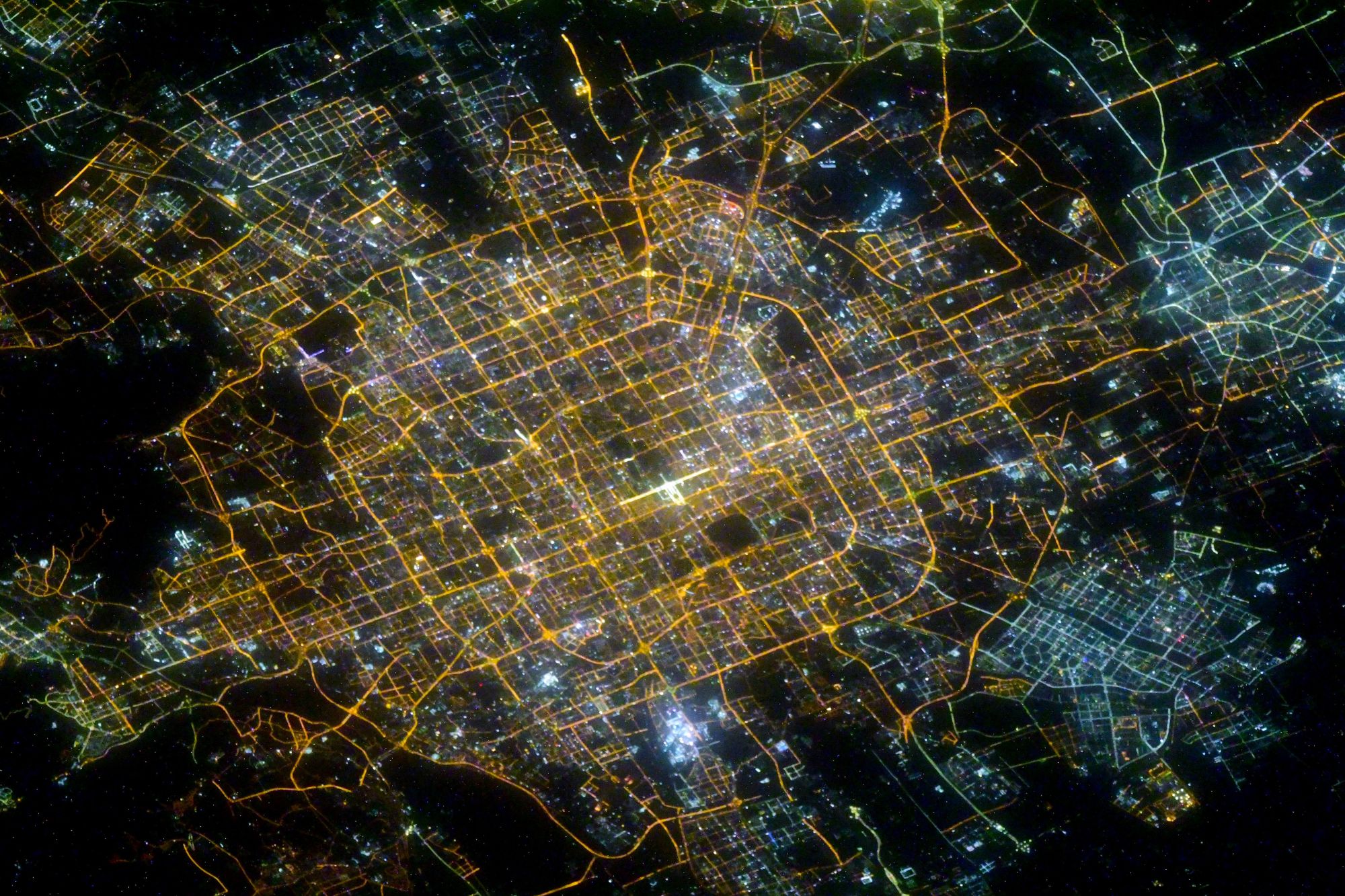
Beijing is located at the northern tip of the roughly triangular North China Plain, which opens to the south and east of the city. Mountains to the north, northwest and west shield the city and northern China’s agricultural heartland from the encroaching desert steppes. The northwestern part of the municipality, especially Yanqing County and Huairou District, are dominated by the Jundu Mountains, while the western part is framed by Xishan or the Western Hills. The Great Wall of China across the northern part of Beijing Municipality was built on the rugged topography to defend against nomadic incursions from the steppes. The urban area of Beijing, on the plains in the south-central of the municipality with elevation of 40-60m, occupies a relatively small but expanding portion of the municipality’s area. The city spreads out in concentric ring roads.
The local scenery on the ground is as follows.

Reference: Sergey Kud-Sverchkov’s Tweet
See earthview photo gallery: LiVEARTH