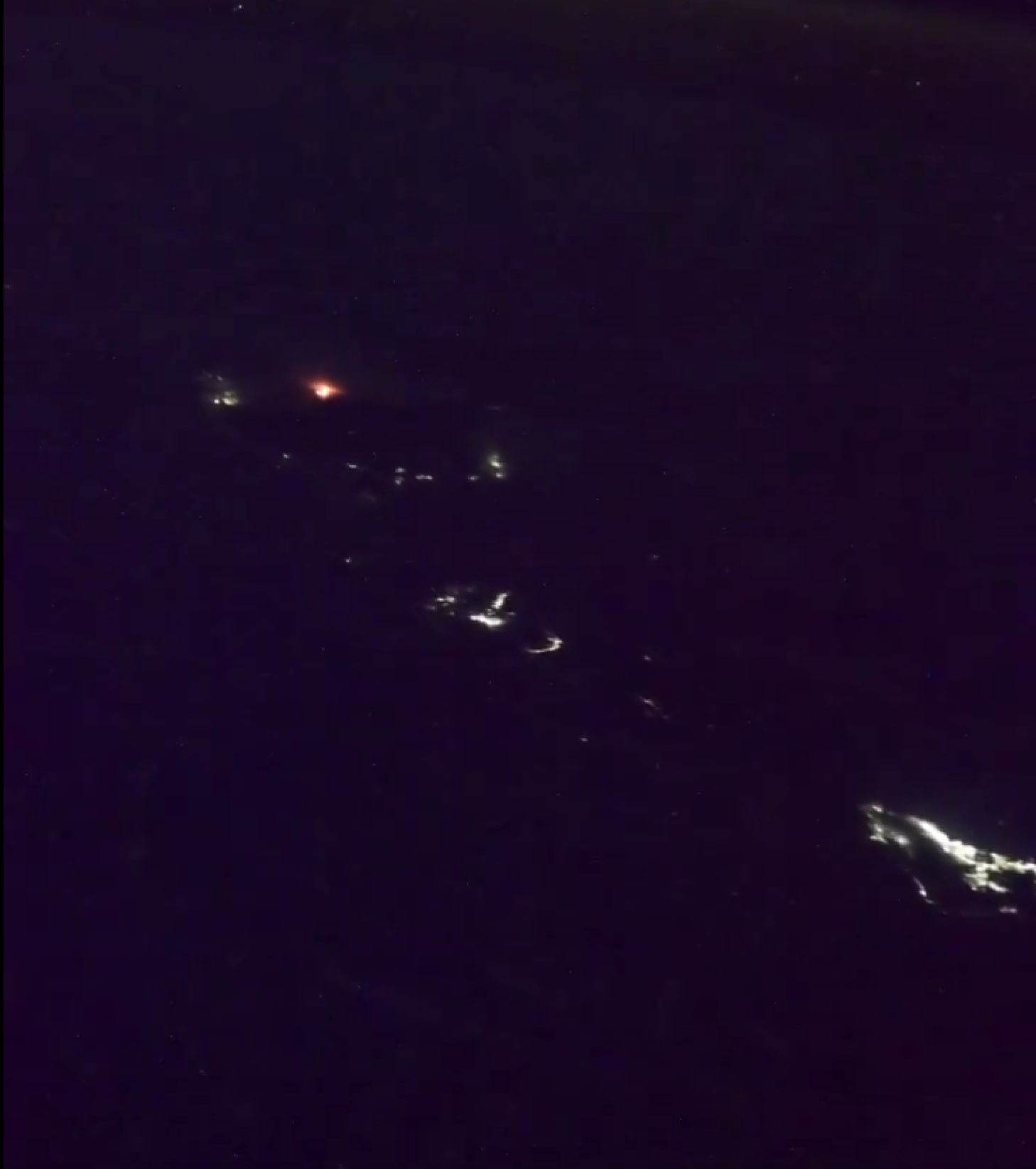
Astronaut Kimiya Yui captured from ISS Hawaii Island and Kilauea Volcano. Kilauea Volcano is readily recognizable from space.
皆さん、こんにちは!
昨日撮影したハワイ諸島の夜間のリアルタイム動画を紹介します。
撮影時、まだ噴火は続いていましたが町の光から離れている様子でしたので少し安心しました。
宇宙から地球の星としての活動を見ると、人類が地球に住ませて頂いている、という感じがしてきます。 pic.twitter.com/FBSZpPfzkD— 油井 亀美也 Kimiya.Yui (@Astro_Kimiya) November 27, 2025
Hawaii, “the Big Island,” is the largest island located in the U.S. state of Hawaii. It is the largest and the southeasternmost of the Hawaiian Islands, a chain of volcanic islands in the North Pacific Ocean. It has 63% of the Hawaiian archipelago’s combined landmass, and is the largest island in the U.S. The island of Hawaii is built from 5 separate shield volcanoes that erupted somewhat sequentially of which Mauna Loa and Kīlauea are still active volcanoes. Because of the volcanic activity, the island of Hawaii is still growing. Between January 1983 and September 2002, lava flows added 220Ha to the island. Sugarcane was the backbone of the island of Hawaii’s economy for more than a century, and today most of the island’s economy is based on tourism, centered primarily in resort areas on the western coast of the island in the North Kona and South Kohala districts. More recently, Hawaii Island has become a focus for sustainable tourism.
The local scenery on the ground is as follows.

Reference: Kimiya Yui’s Tweet
See earthview photo gallery: LiVEARTH