Astronaut Sergey Kud-Sverchkov captured from ISS Houston, Texas, U.S.
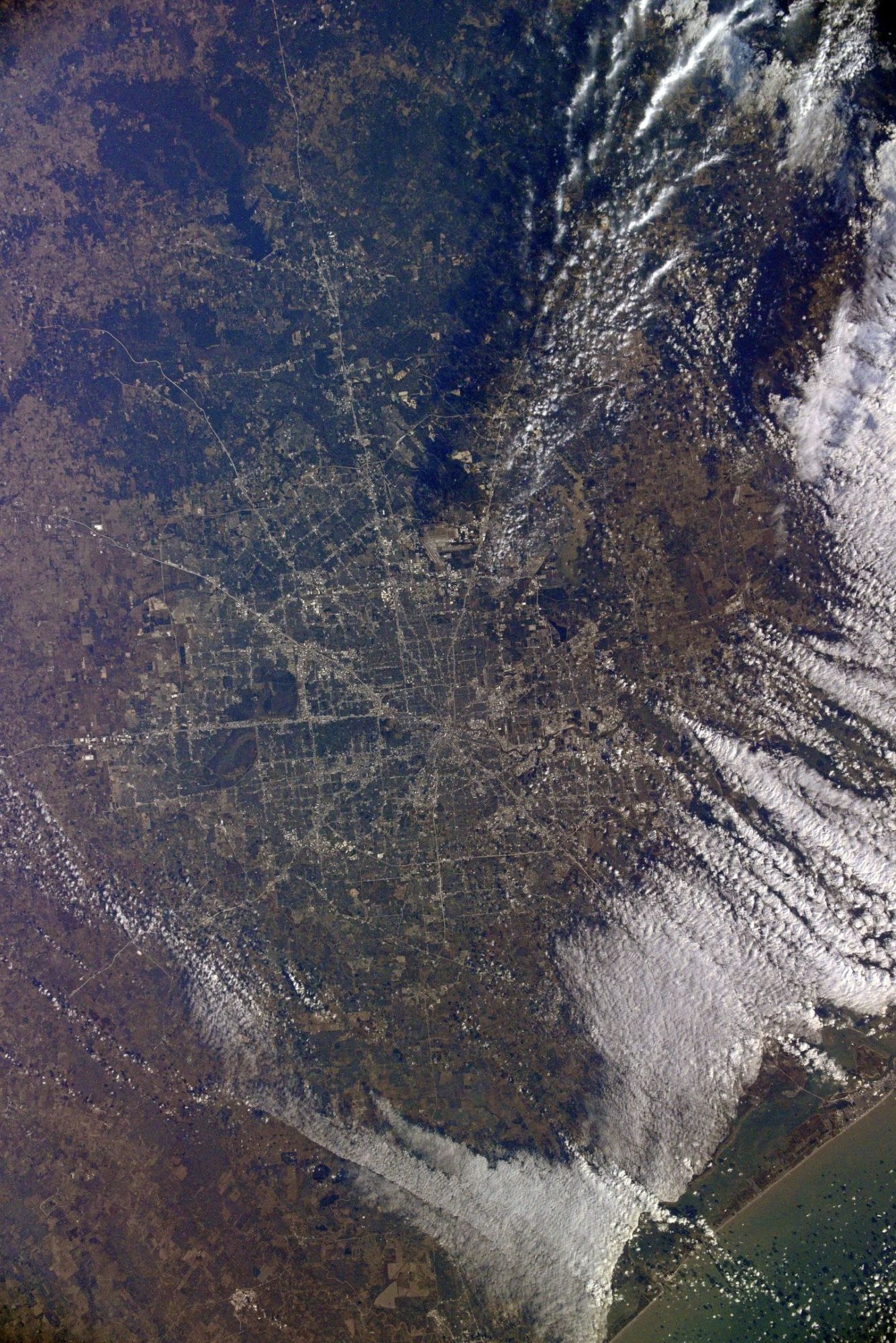
Houston is the 4th populous city in the United States, with a population of 2.3 million. Houston was founded by land investors on August 30, 1836, at the confluence of Buffalo Bayou and White Oak Bayou (a point now known as Allen’s Landing) and incorporated as a city on June 5, 1837. The city is named after former General Sam Houston, who was president of the Republic of Texas and had won Texas’s independence from Mexico at the Battle of San Jacinto 40km east of Allen’s Landing. After briefly serving as the capital of the Texas Republic in the late 1830s, Houston grew steadily into a regional trading center for the remainder of the 19th century. The 20th century brought a convergence of economic factors that fueled rapid growth in Houston, including a burgeoning port and railroad industry, the decline of Galveston as Texas’s primary port following a devastating 1900 hurricane, the subsequent construction of the Houston Ship Channel, and the Texas oil boom. In the mid-20th century, Houston’s economy diversified, as it became home to the Texas Medical Center – the world’s largest concentration of healthcare and research institutions – and NASA’s Johnson Space Center, home to the Mission Control Center.
The local scenery on the ground is as follows.

Reference: Sergey Kud-Sverchkov’s Tweet
See earthview photo gallery: LiVEARTH